
India's Agrochemical Industry at an Inflection Point
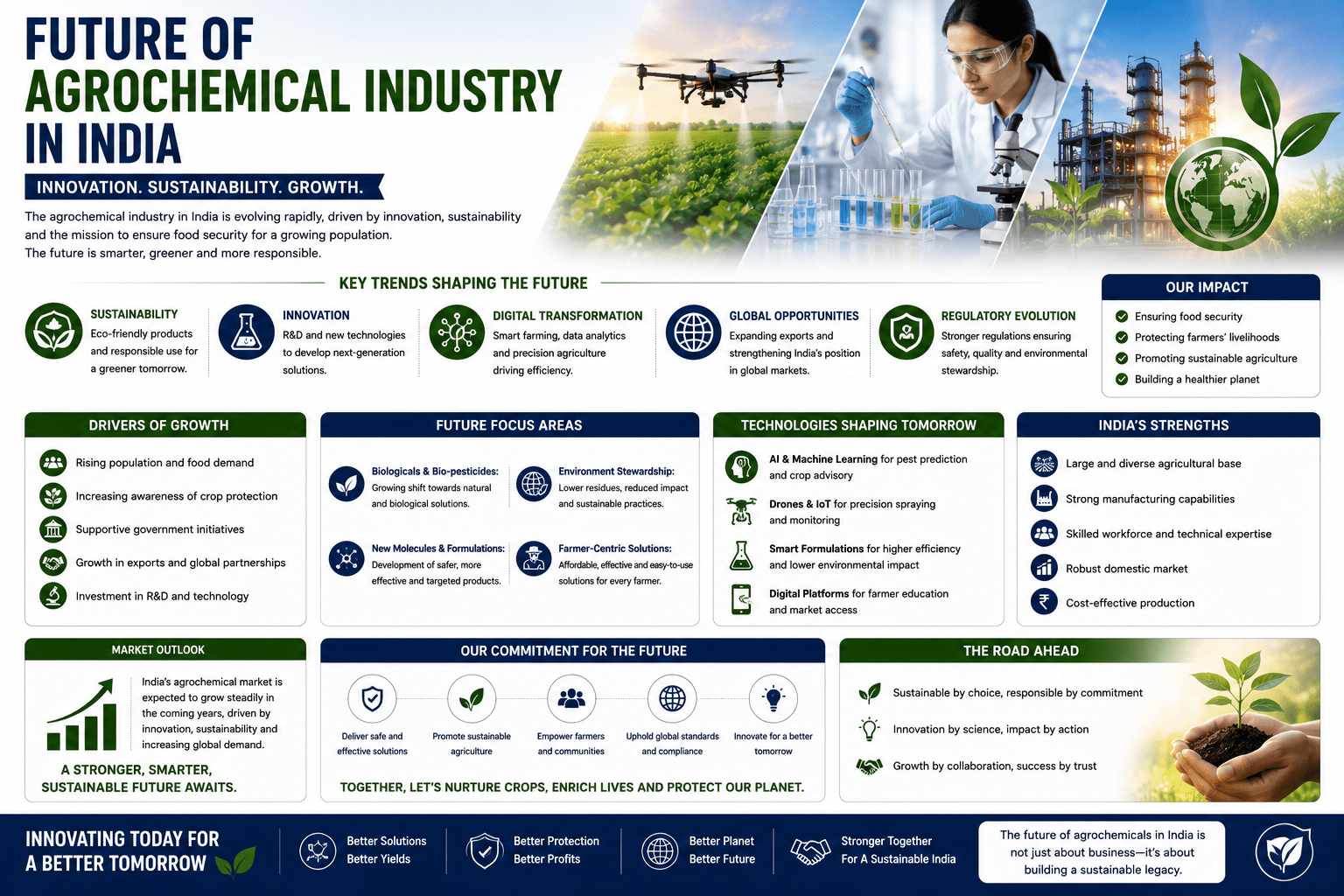
India's agrochemical industry stands at an inflection point - poised between the opportunities created by growing global demand for food and crop protection, and the challenges posed by climate change, pest resistance, regulatory tightening, and sustainability imperatives. The companies that will lead the industry's next chapter - like Ratnakar India Ltd, positioned as a progressive agrochemical manufacturer Gujarat - will be those that successfully navigate these challenges while capitalising on the enormous opportunities that the evolving agricultural landscape presents. Understanding the key trends shaping the industry's future is essential for any participant planning for long-term success.
Growing Global Demand: The Structural Driver
The fundamental driver of India's agrochemical industry's future growth is the inexorable increase in global demand for food. With global population projected to reach 10 billion by 2050, and with the growing middle classes of Asia and Africa increasing per capita food consumption and shifting toward more diverse, protein-rich diets, global food production must increase dramatically on a land base that cannot expand proportionally. Crop protection - preventing the 20-40% of production that is currently lost to pests, diseases, and weeds - will be a critical lever in achieving this production increase. As a leading crop protection products manufacturer, Ratnakar India is positioned to contribute to this global food production imperative through continued product innovation and expanding supply capabilities.
Technology Innovation: The Next Generation of Solutions
The next decade will see significant technological innovation in crop protection. Biological crop protection - using microorganisms, natural compounds, and plant-derived substances for pest and disease management - will grow from a niche segment to a significant market force. Precision application technology - drones, variable rate sprayers, GPS-guided application equipment - will improve the efficiency and reduce the environmental footprint of agrochemical application. Digital agriculture platforms integrating pest monitoring, weather forecasting, and application decision support will optimise when and where crop protection products are applied. Indian insecticide manufacturers & suppliers who invest in biological product development and precision agriculture compatibility will be positioned to capture these growing segments.
Sustainability: From Aspiration to Requirement
Sustainability is moving from a desirable attribute to a procurement requirement for large agricultural buyers globally. Food companies, supermarkets, and institutional buyers increasingly demand documentation of sustainable farming practices - including responsible agrochemical use - in their supply chains. Regulatory authorities worldwide are tightening restrictions on older, less selective chemistries and requiring more comprehensive environmental and health assessments for new product registrations. Indian agrochemical formulation companies that proactively develop and promote sustainable product and practice offerings will be best positioned to serve the markets of the future, where sustainability credentials will be a competitive differentiator.
Export Growth: India's Expanding Global Footprint
India's agrochemical export growth trajectory is set to continue and accelerate. As global agricultural production expands in developing country markets - particularly in Africa and Southeast Asia - demand for affordable, quality crop protection products will grow rapidly. Indian manufacturers, combining competitive production economics with improving quality standards and expanding product registrations in key markets, are positioned to capture a growing share of this expanding global demand. Companies like Ratnakar India, investing in export market development, international registrations, and global supply chain capabilities as premier pesticide exporters from India, will be among the primary beneficiaries of this export growth opportunity.
Regulatory Evolution: Adapting to a Changing Landscape
The regulatory landscape for agrochemicals globally is evolving rapidly - becoming more stringent, more evidence-based, and more focused on environmental and health protection. Indian manufacturers must invest in regulatory expertise and data generation to maintain market access as regulations evolve, both domestically and in export markets. Companies that proactively engage with regulatory developments, invest in generating the required safety and efficacy data, and maintain transparent relationships with regulatory authorities will navigate this evolving landscape more successfully than those who treat regulatory compliance as a reactive cost rather than a strategic investment.
Conclusion: Optimism Grounded in Capability
The future of India's agrochemical industry is fundamentally optimistic - driven by growing demand, improving capabilities, expanding export opportunities, and the essential role that crop protection plays in global food security. Companies like Ratnakar India Ltd, with their commitment to manufacturing excellence, quality assurance, continuous innovation, and sustainable practices, are well-placed to be leaders of this optimistic future. The challenges ahead are real but surmountable for companies that combine genuine technical capability with strategic vision and operational excellence.
- Growing global population and food demand create structural long-term growth drivers for India's agrochemical industry.
- Biological crop protection and precision application technology represent the next significant innovation frontier for manufacturers.
- Sustainability requirements are transitioning from aspirational to mandatory, requiring proactive product and practice development.
- Export growth to expanding African and Southeast Asian agricultural markets offers major opportunity for Indian manufacturers.
- Proactive regulatory engagement and data investment will differentiate successful manufacturers in an evolving compliance landscape.
- Companies combining technical excellence, quality commitment, and strategic investment are positioned for long-term industry leadership.