
Why Quality Standards Matter in Agrochemicals
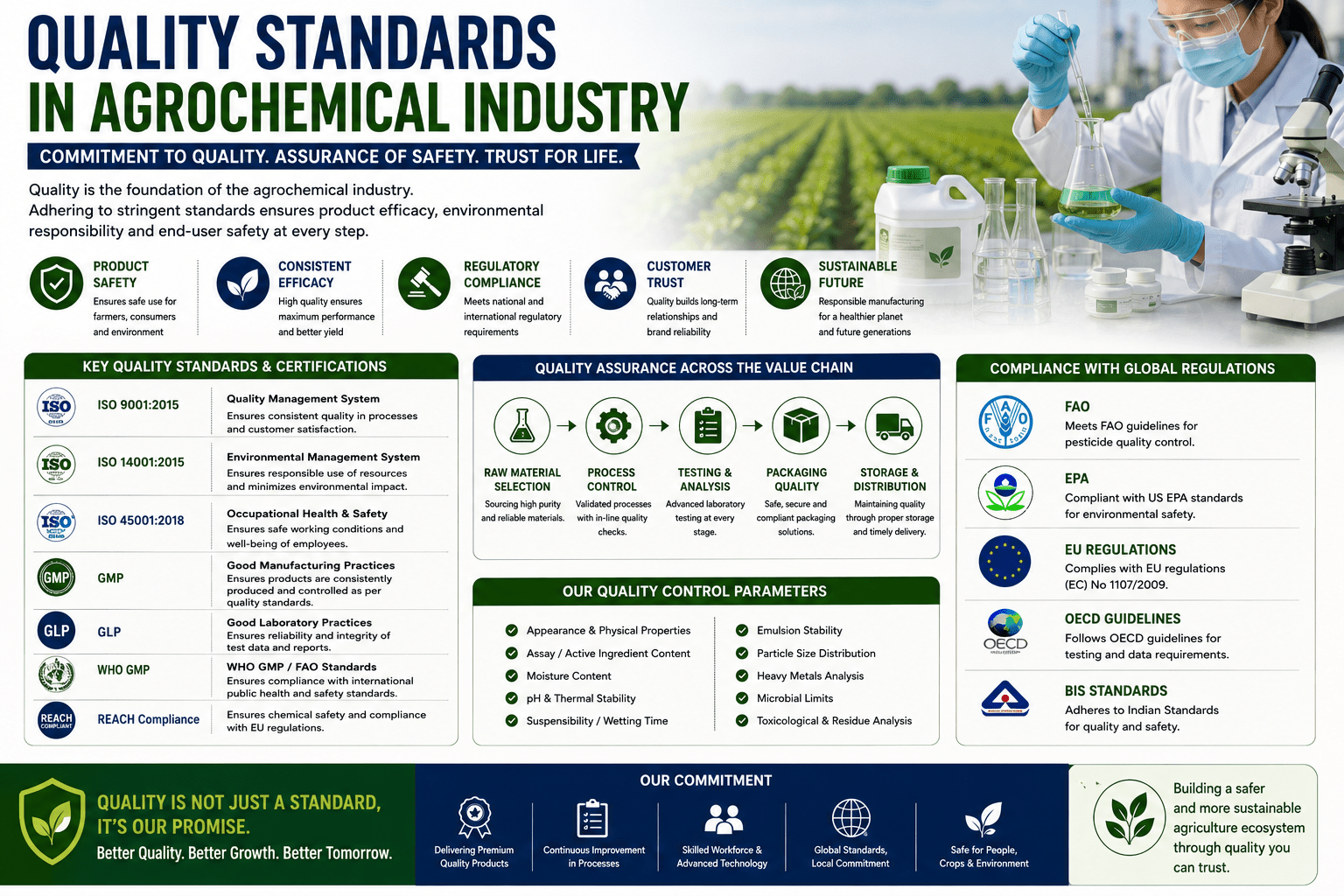
In few industries are quality standards as critical as in agrochemicals. The consequences of quality failures in crop protection products can be severe - an insecticide with substandard active ingredient content fails to control pests, leading to crop losses. A fungicide with incorrect pH might degrade rapidly on storage, losing efficacy before application. A herbicide with incorrect active ingredient concentration can cause crop damage. Beyond efficacy failures, safety failures - excessive impurities, incorrect labelling, improper packaging - can pose risks to farmers who handle the products and to the environment. Comprehensive quality standards implemented by responsible agrochemical manufacturers Gujarat like Ratnakar India are essential safeguards that protect everyone in the agricultural chain from farm to table.
ISO Standards: The Quality Management Framework
ISO 9001 is the internationally recognised standard for Quality Management Systems (QMS), providing a framework for consistently producing products and services that meet customer requirements and applicable regulatory requirements. For agrochemical manufacturers, ISO 9001 certification demonstrates that they have implemented documented processes covering all aspects of product development, manufacturing, quality control, customer communication, and continuous improvement. Certification requires regular surveillance audits by accredited certification bodies, ensuring that quality systems are maintained and continuously improved. ISO 9001-certified manufacturers like Ratnakar India provide buyers with confidence that the quality management framework behind their products meets international standards as a quality-focused crop protection products manufacturer.
Good Manufacturing Practice (GMP)
Good Manufacturing Practice (GMP) guidelines provide industry-specific quality requirements for agrochemical production, covering facility design and cleanliness, equipment qualification and calibration, raw material testing and release, manufacturing process validation, in-process quality controls, finished product testing and release, batch record documentation, and product storage and distribution controls. GMP compliance ensures that every batch is produced consistently according to validated processes, with complete documentation enabling full traceability from raw material to finished product. Ratnakar India's manufacturing operations follow GMP principles as a core quality commitment, ensuring that the technical grade pesticide supplier and formulation operations meet the highest manufacturing standards.
Regulatory Standards: Government-Mandated Quality
In India, the Insecticides Act, 1968, and its Rules establish legal quality requirements for pesticide manufacture and sale. The Central Insecticides Board and Registration Committee (CIB&RC) registers pesticide products against defined technical specifications and grants licences to manufacturers meeting the required standards. State agricultural departments conduct random market sampling and testing to verify that products meet registered specifications. These regulatory quality standards provide a minimum quality floor for all registered pesticide products. Manufacturers who consistently meet and exceed these standards - verified through both internal quality systems and regulatory audits - demonstrate quality commitment that distinguishes them from minimum-compliance operations.
International Regulatory Standards for Export
Exporting agrochemicals requires compliance with importing country regulatory standards - which are often more stringent than domestic requirements. European Union maximum residue limits (MRLs) for food crops are among the most stringent globally. US EPA registration requirements demand comprehensive efficacy and safety data. Australian regulatory standards apply specific residue and environmental requirements. Meeting these diverse international standards requires significant investment in analytical capability, regulatory expertise, and documentation systems. Only manufacturers who meet these international standards can serve regulated export markets, making international compliance a quality differentiator that separates professional pesticide exporters from India from domestic-only players.
Continuous Quality Improvement
Quality standards in the agrochemical industry are not static - they evolve as science advances, as regulatory requirements are updated, and as customer expectations rise. Leading manufacturers invest in continuous quality improvement programs - regularly reviewing analytical methods against current best practices, upgrading equipment to maintain measurement accuracy, training staff on evolving quality standards, and proactively engaging with regulatory developments. Ratnakar India's commitment to continuous quality improvement ensures that its products and processes remain at the forefront of industry standards, providing buyers with long-term assurance of quality relevance as an agrochemical formulation company committed to excellence.
- Quality failures in agrochemicals directly affect crop protection efficacy, farmer safety, and environmental compliance.
- ISO 9001 certification provides internationally recognised quality management system assurance for manufacturing operations.
- GMP compliance ensures every batch is produced consistently with full documentation for complete traceability.
- CIB&RC registration and state regulatory audits provide government-mandated quality verification for domestic market compliance.
- International regulatory compliance - EU MRLs, EPA registration - differentiates export-capable manufacturers from domestic players.
- Continuous quality improvement investment ensures standards relevance as regulations evolve and customer expectations rise.