
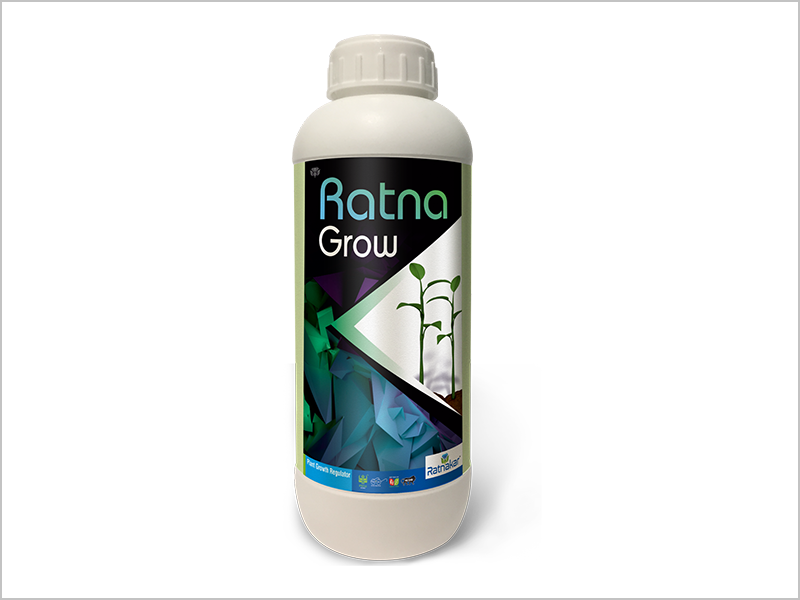
RATNA GROW
Plant Growth Regulator
RATNA GROW is a comprehensive plant growth regulator from Ratnakar India Ltd, Ahmedabad - India's leading agrochemical manufacturer, supplier, and exporter. RATNA GROW promotes overall plant development, improving vegetative growth, flowering, fruit setting, and yield on grapes, cotton, banana, sugarcane, rice, cabbage, onion, brinjal, okra, groundnut, and mulberry. Its growth-promoting formulation helps crops achieve their full genetic yield potential. Manufactured and exported by Ratnakar India from Gujarat, RATNA GROW is a trusted growth promotion solution for Indian farmers cultivating diverse crops where improved plant vigor, productivity, and overall crop performance are essential for profitable agriculture.
| Mode of Action | Plant Growth Regulator |
|---|---|
| Major Crops | Grapes, Cotton, Banana, Sugarcane, Rice, Cabbage, Onion, Brinjal / Okra, Groundnut, Mulberry |
| Packing | 100 ml, 250 ml, 500 ml, 1 Ltr. |
FAQ for RATNA GROW
Which crops is RATNA GROW recommended for?
RATNA GROW is recommended for grapes, cotton, banana, sugarcane, rice, cabbage, onion, brinjal, okra, groundnut, and mulberry - providing broad-spectrum growth promotion across diverse crop production systems.
How does RATNA GROW improve crop yield?
RATNA GROW's active components stimulate various plant growth processes including cell division, nutrient uptake, and photosynthesis efficiency, helping crops achieve better vegetative growth, flowering, and yield potential.
When should RATNA GROW be applied in grapes?
Apply RATNA GROW at specific grape growth stages including early shoot development and berry set for improved bunch development, berry size, and overall grape yield and quality improvement.
Is RATNA GROW effective in rice?
Yes, RATNA GROW can improve rice tillering, vegetative vigour, and overall crop development when applied at appropriate growth stages, contributing to improved grain yield in paddy cultivation.
Can RATNA GROW be used on mulberry for silkworm production?
Yes, RATNA GROW promotes better leaf quality and quantity in mulberry - the primary food source for silkworms - potentially improving silk production efficiency when applied following label recommendations.