
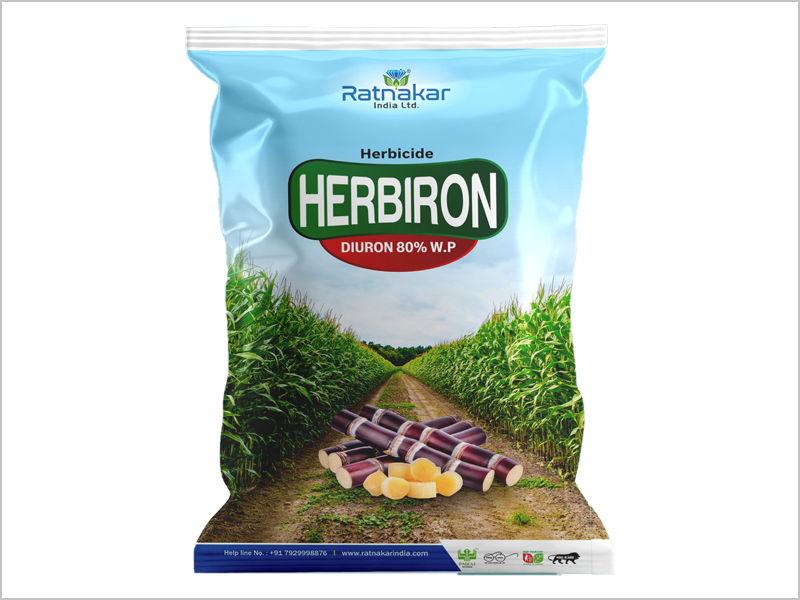
Herbiron
Diuron 80% WP
Herbiron (Diuron 80% WP) is a selective systemic herbicide from Ratnakar India Ltd, Ahmedabad - India's trusted agrochemical manufacturer, supplier, and exporter. Diuron inhibits photosystem II (photosynthesis inhibitor), controlling annual grasses and broad-leaf weeds in cotton, maize, sugarcane, banana, citrus, grapes, and rubber plantations. Herbiron can be applied both pre-emergence and early post-emergence for weed control. Manufactured and exported by Ratnakar India from Gujarat, Herbiron is a reliable soil-applied systemic herbicide for plantation crop weed management, trusted by farmers and plantation managers for economical and effective suppression of troublesome annual weeds.
| Mode of Action | Selective Herbicide |
|---|---|
| Major Crops | Cotton, Maize, Sugarcane, Banana, Citrus, grapes, Rubber |
| Target Weeds | Annual grasses and broadleaf weeds |
| Packing | 500 gm |
FAQ for Herbiron
What weeds does Herbiron control?
Herbiron controls annual grasses and broad-leaf weeds in cotton, maize, sugarcane, banana, citrus, grapes, and rubber plantations through systemic photosystem II inhibition.
How does Diuron in Herbiron work?
Diuron inhibits photosystem II electron transport in plant chloroplasts, blocking photosynthesis and causing accumulation of toxic intermediates leading to weed death through systemic action.
When should Herbiron be applied?
Herbiron can be applied pre-emergence (before weed germination) or early post-emergence when weeds are small. Apply to moist soil for best pre-emergence activity through soil uptake.
Is Herbiron safe in sugarcane?
Yes, Herbiron is selective in established sugarcane and other tolerant plantation crops when applied at recommended rates. Avoid use on young, recently planted or stressed sugarcane for crop safety.
What is the soil persistence of Herbiron?
Diuron has moderate to long soil persistence (2–4 months depending on soil type and conditions), providing extended weed control but requiring consideration before replanting sensitive crops in treated soils.