
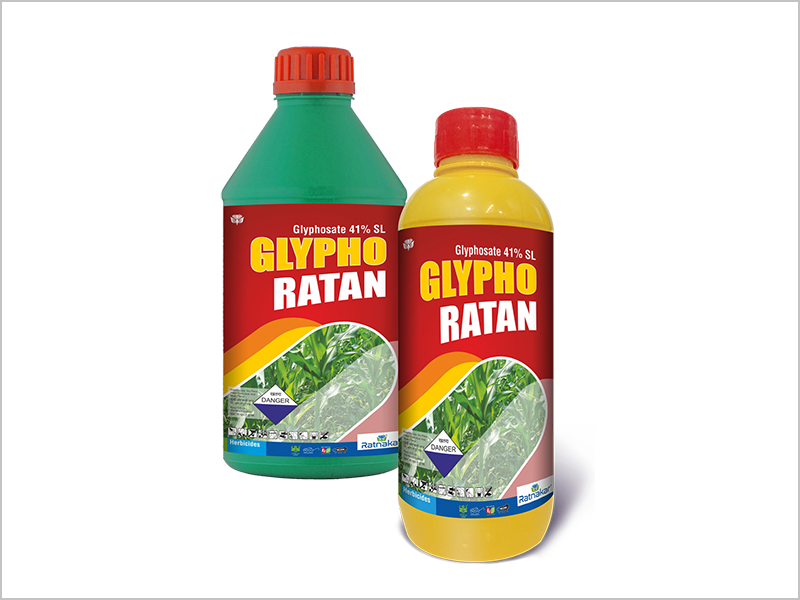
GLYPHO RATAN
Glyphosate 41% SL
GLYPHO RATAN (Glyphosate 41% SL) is a broad-spectrum non-selective systemic herbicide from Ratnakar India Ltd, Ahmedabad - India's trusted agrochemical manufacturer, supplier, and exporter. Glyphosate inhibits the EPSPS enzyme in the shikimate pathway, killing virtually all actively growing plant species. GLYPHO RATAN controls diverse monocot and dicot weeds including Axonopus, Cynodon, Imperata, Sorghum, Paspalum, and many others in tea plantations and non-cropped areas. Manufactured and exported by Ratnakar India from Gujarat, GLYPHO RATAN is a trusted weedicide for total vegetation management in plantation crops, industrial areas, roadsides, and non-crop situations.
| Mode of Action | Non Selective Weedicide |
|---|---|
| Major Crops | Tea (Non cropped areas) |
| Target Weeds | Axonopus Compressus, Cynodon Dactylon, Imperata Cylindrica, Polygonum Perfoliatum, Paspalum Scorbiculatum, Arundinella Bengalensis, Kalm Grass, Sorghum Helepense And Other Monocot & Dicot Weeds General Weed Control |
| Packing | 250 ml, 500 ml, 1 Ltr, 5 Ltr. |
FAQ for GLYPHO RATAN
Is GLYPHO RATAN safe to use near crops?
GLYPHO RATAN is non-selective and kills all green plants on contact. It must be applied using directed spray or shielded application to avoid contact with crop plants in plantation situations.
How does Glyphosate in GLYPHO RATAN work?
Glyphosate inhibits the EPSPS enzyme in the shikimate aromatic amino acid biosynthesis pathway, essential only in plants and microorganisms, causing slow systemic death of all treated plant species.
Which weeds does GLYPHO RATAN control?
GLYPHO RATAN controls a wide range of both monocot and dicot weeds including Axonopus, Cynodon, Imperata, Sorghum halepense, Paspalum, Arundinella, and most other actively growing weed species.
When is the best time to apply GLYPHO RATAN?
Apply GLYPHO RATAN when weeds are actively growing and green. Avoid application during drought stress, heavy dew, or rain within 6 hours of application. Use directed spray in plantation crops.
How long does GLYPHO RATAN remain active in soil?
Glyphosate binds tightly to soil particles and is rapidly degraded by soil microorganisms, typically leaving no significant soil residual activity - allowing replanting or sowing within days of application.