
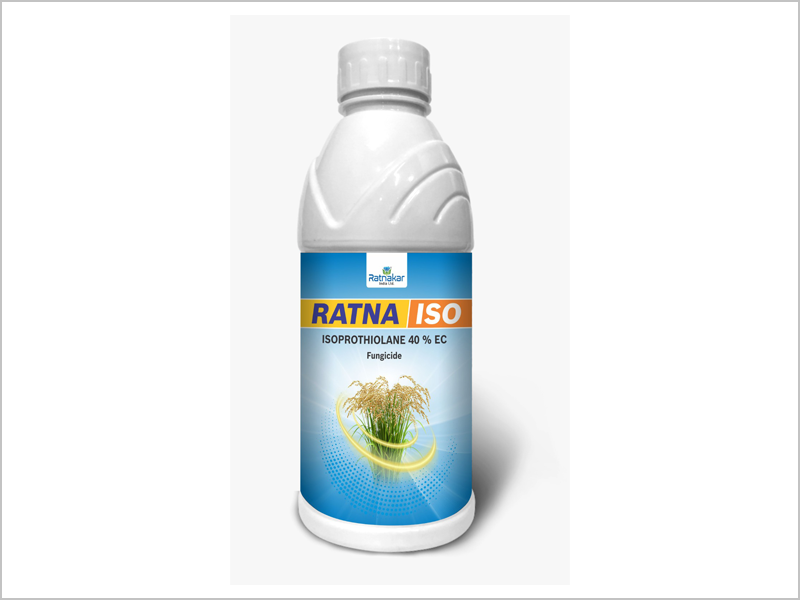
Ratna ISO
Isoprothiolane 40% EC
Ratna ISO (Isoprothiolane 40% EC) is a systemic fungicide from Ratnakar India Ltd, Ahmedabad - India's trusted agrochemical manufacturer, supplier, and exporter. Isoprothiolane inhibits phospholipid biosynthesis, providing systemic protective and curative control of Blast (Pyricularia oryzae) in rice with unique additional insecticidal properties against Brown Plant Hopper. Ratna ISO is a dual-function product. The EC formulation ensures excellent systemic absorption. Manufactured and exported by Ratnakar India from Gujarat, Ratna ISO is a unique multi-function fungicide-insecticide trusted by Indian rice farmers for reliable Blast control while also managing plant hopper pressure in a single product application.
| Mode of Action | Systemic action | |
|---|---|---|
| Recommended Crops | Target Disease | Dose/Acre |
| Rice | Blast | 300 ml |
| Packing | 100 ml, 250 ml, 500 ml, 1 ltr | |
FAQ for Ratna ISO
What is unique about Ratna ISO compared to other fungicides?
Ratna ISO (Isoprothiolane) is unique - it has both fungicidal activity against rice Blast and insecticidal activity against Brown Plant Hopper, making it a rare dual-function crop protection product.
How does Isoprothiolane control rice Blast?
Isoprothiolane inhibits phospholipid biosynthesis in fungal cell membranes, disrupting membrane integrity and function in Pyricularia oryzae with systemic protective and curative blast control activity.
When should Ratna ISO be applied for Blast control?
Apply Ratna ISO at the first appearance of Leaf Blast symptoms or preventively at tillering. For Neck Blast prevention, apply at early panicle initiation stage before panicle emergence.
Can Ratna ISO also reduce plant hopper populations?
Yes, Isoprothiolane has demonstrated insecticidal activity against Brown Plant Hopper in rice, providing additional pest management value alongside its primary fungicidal blast control activity.
Is Ratna ISO effective in all rice growing seasons?
Yes, Ratna ISO can be used in both kharif and rabi rice seasons for blast management wherever Pyricularia oryzae blast infections are a risk to rice yield and quality.