
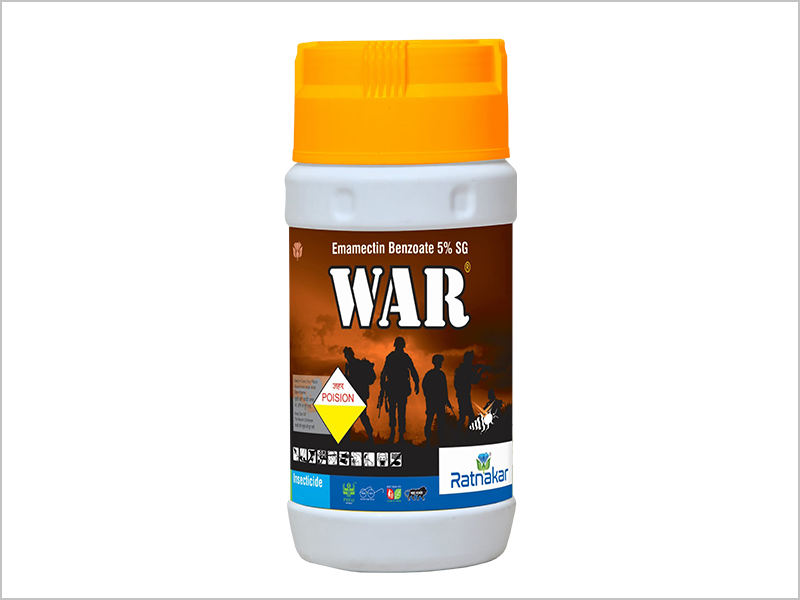
WAR
Emamectin Benzoate 5% SG
WAR (Emamectin Benzoate 5% SG) is a premium high-concentration biological insecticide from Ratnakar India Ltd, Ahmedabad - India's trusted agrochemical manufacturer, supplier, and exporter. Emamectin Benzoate activates glutamate-gated chloride channels causing irreversible pest paralysis, controlling thrips, pod borers, bollworms, tea loopers, diamond back moth, fruit borers, and mites across grapes, red gram, cotton, chickpea, tea, cabbage, brinjal, okra, and chilli. WAR's 5% SG formulation allows very low dose application. Manufactured and exported by Ratnakar India from Gujarat, WAR is a trusted premium insecticide for farmers managing diverse economically important pest species on high-value crops.
| Mode of Action | Non-systemic and Translaminar action | |
|---|---|---|
| Recommended Crops | Target Pest | Dose/Acre |
| Cotton | Boll worms | 76-88 gm |
| Chick pea | Pod borer | 88 gm |
| Red gram | Pod borer | 88 gm |
| Okra | Fruit & Shoot Borer | 54-68 gm |
| Cabbage | Diamond back moth | 60-80 gm |
| Chilli | Fruit borer, Thrips,Mites | 80 gm |
| Brinjal | Fruit and Shoot borer | 80 gm |
| Grapes | Thrips | 88 gm |
| Tea | Tea looper | 80 gm |
| Packing | 100 gm, 250 gm, 500 gm | |
FAQ for WAR
What is the advantage of WAR's 5% SG formulation?
WAR contains 5% Emamectin Benzoate - among the highest concentrations available - allowing very low dose application (100–250g per acre) with premium efficacy and reduced packaging per treated area.
Which crops is WAR recommended for?
WAR is recommended for grapes, red gram, cotton, chickpea, tea, cabbage, brinjal, okra, and chilli for control of diverse lepidopteran pests, thrips, and mites.
How does Emamectin Benzoate in WAR work?
Emamectin Benzoate activates glutamate-gated chloride ion channels, causing irreversible hyperpolarisation of insect nerve and muscle cells, leading to paralysis, feeding cessation, and death of target pests.
Is WAR effective against diamond back moth in cabbage?
Yes, WAR is highly effective against diamond back moth in cabbage - including some populations resistant to conventional insecticides - due to Emamectin Benzoate's unique mode of action.
Can WAR be used for mite control?
Yes, Emamectin Benzoate in WAR has some acaricidal activity against mites in addition to insecticidal properties, providing additional value against mite infestations in treated crops.