
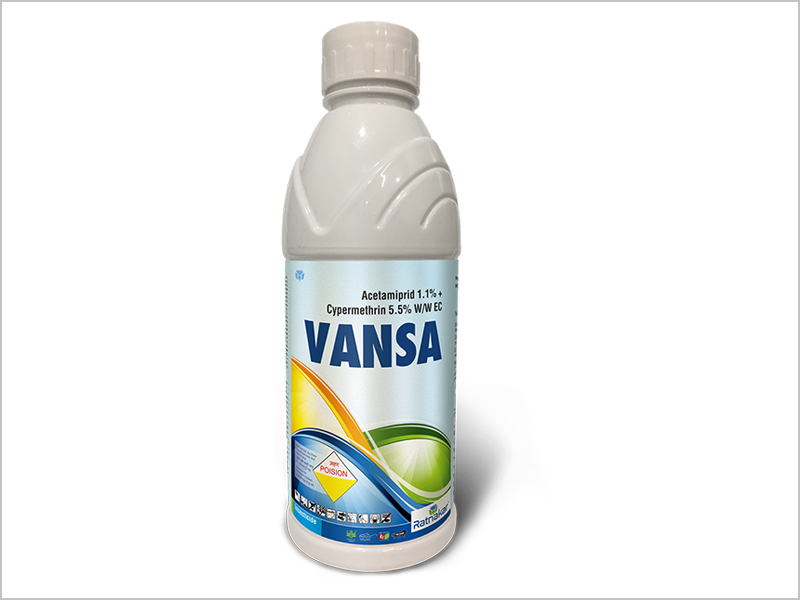
VANSA
Acetamiprid 1.1% + Cypermethrin 5.5% EC
VANSA (Acetamiprid 1.1% + Cypermethrin 5.5% EC) is a combination insecticide from Ratnakar India Ltd, Ahmedabad - India's trusted agrochemical manufacturer, supplier, and exporter - providing effective contact and stomach action against aphids, jassids, thrips, and bollworms in cotton. The combination of Acetamiprid (neonicotinoid, systemic) and Cypermethrin (pyrethroid, contact) delivers dual-mode action with rapid knockdown and residual protection. VANSA is a reliable and economical choice for cotton farmers. Manufactured and exported by Ratnakar India from Gujarat, VANSA delivers broad-spectrum coverage of the cotton sucking pest complex and bollworm complex in a single cost-effective spray application.
| Mode of Action | Systemic and Contact action | |
|---|---|---|
| Recommended Crops | Target Pest | Dose/Acre |
| Cotton | Aphids, Jassids, Thrips, Bollworms | 400 ml |
| Packing | 100 ml, 250 ml, 500 ml, 1 ltr. | |
FAQ for VANSA
How do Acetamiprid and Cypermethrin work together in VANSA?
Acetamiprid provides systemic neonicotinoid activity against sucking pests, while Cypermethrin adds rapid contact pyrethroid knockdown of chewing insects - delivering comprehensive dual-mode cotton pest control.
Which pests does VANSA control in cotton?
VANSA controls aphids, jassids, thrips, and bollworms in cotton - addressing both the sucking pest complex and bollworm complex simultaneously with a single convenient spray application.
Does VANSA help manage insecticide resistance?
The neonicotinoid (Acetamiprid) + pyrethroid (Cypermethrin) combination provides two different modes of action, reducing selection pressure and helping manage resistance in cotton pest populations.
Is VANSA economical for cotton pest management?
Yes, VANSA's combination product provides broad-spectrum coverage against multiple pest types in a single product, reducing the need for separate purchases and applications of multiple individual insecticides.
When should VANSA be applied in cotton?
Apply VANSA when sucking pest populations exceed economic threshold levels or at first appearance of bollworm eggs or young larvae during cotton bud, flower, and boll formation growth stages.