
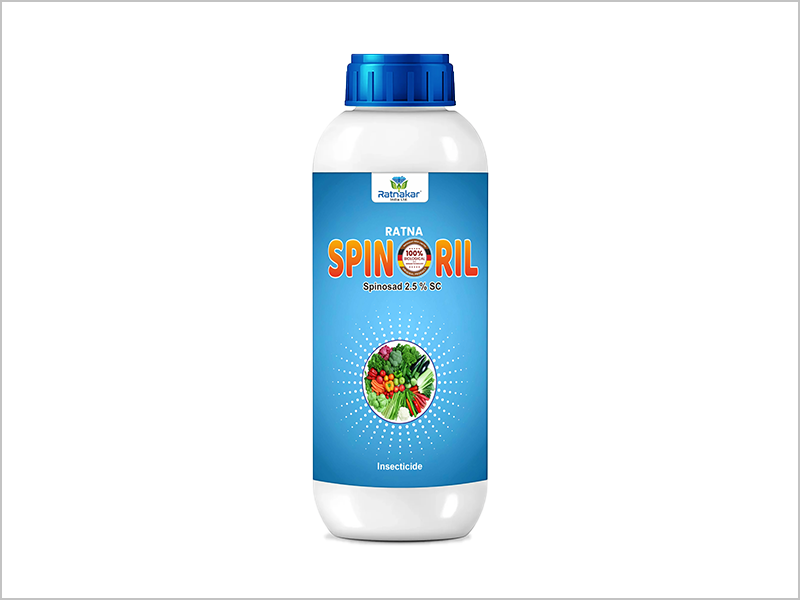
RATNA SPINORIL
Spinosad 2.50% SC
RATNA SPINORIL (Spinosad 2.50% SC) is a biological insecticide from Ratnakar India Ltd, Ahmedabad - India's trusted agrochemical manufacturer, supplier, and exporter - providing effective control of diamond back moth (DBM) in cabbage and cauliflower. Spinosad, from natural fermentation of Saccharopolyspora spinosa, uniquely activates nicotinic acetylcholine receptors and disrupts GABA-gated ion channels causing paralysis. RATNA SPINORIL is highly effective against DBM populations resistant to conventional insecticides. Its low mammalian toxicity and biological origin suit IPM programs and near-harvest applications. Manufactured and exported by Ratnakar India from Gujarat, RATNA SPINORIL is a premium safe bio-insecticide.
| Mode of Action | Broad-spectrum bio-insecticide that acts via contact and ingestion action | |
|---|---|---|
| Recommended Crops | Target Pest | Dose/Acre |
| Cabbage & Cauliflower | Diamond back moth | 200-280 ml |
| Packing | 100 ml, 250 ml, 500 ml, 1 ltr | |
FAQ for RATNA SPINORIL
What makes RATNA SPINORIL effective against resistant DBM?
Spinosad's unique dual mode (nicotinic AChR activation + GABA disruption) is effective against diamond back moth populations resistant to pyrethroids, organophosphates, and even Bt-based biological insecticides.
Is RATNA SPINORIL safe for use near harvest?
Yes, Spinosad in RATNA SPINORIL has short pre-harvest intervals for brassica crops due to its low mammalian toxicity and rapid degradation profile in the environment.
How does Spinosad in RATNA SPINORIL work?
Spinosad activates insect nicotinic acetylcholine receptors at a unique binding site and disrupts GABA-gated ion channels, causing involuntary muscle contractions, paralysis, and eventual pest death.
Can RATNA SPINORIL be used in organic farming?
Spinosad from natural fermentation is approved in some organic certification programs. Verify with your specific certification body whether RATNA SPINORIL meets their organic production standards.
Is RATNA SPINORIL suitable for IPM programs?
Yes, RATNA SPINORIL's biological origin, low toxicity to many beneficials, and unique dual mode of action make it an ideal component for integrated pest management programs in brassica crops.