
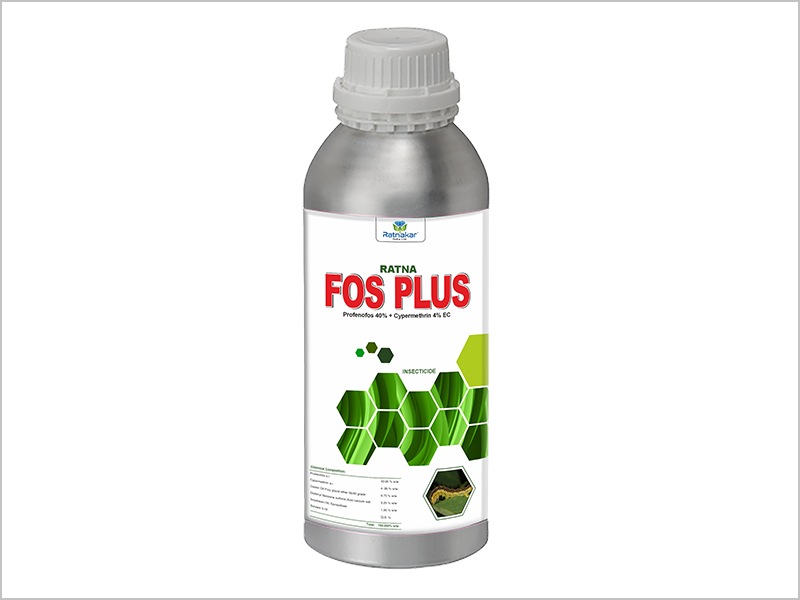
RATNAFOS PLUS
Profenofos 40% + Cypermethrin 4% EC
RATNAFOS PLUS (Profenofos 40% + Cypermethrin 4% EC) is a premium dual-mode combination insecticide from Ratnakar India Ltd, Ahmedabad - India's trusted agrochemical manufacturer, supplier, and exporter. The synergistic combination of Profenofos (organophosphate) and Cypermethrin (pyrethroid) delivers enhanced knockdown with extended residual activity against the cotton bollworm complex through dual contact and systemic action. The combination reduces resistance risk while broadening pest control spectrum. Manufactured and exported by Ratnakar India from Gujarat, RATNAFOS PLUS is the preferred choice for cotton farmers seeking superior science-backed dual-mode bollworm management with proven reliability and performance.
| Mode of Action | Contact and Stomach action | |
|---|---|---|
| Recommended Crops | Target Pest | Dose/Acre |
| Cotton | Boll worm complex | 400-600 ml |
| Packing | 100 ml, 250 ml, 500 ml, 1 Itr. | |
FAQ for RATNAFOS PLUS
Why is RATNAFOS PLUS a combination product?
The combination of Profenofos (organophosphate) and Cypermethrin (pyrethroid) provides synergistic dual-mode action, broader pest spectrum control, faster knockdown, and reduced resistance development risk in cotton.
Which bollworm species does RATNAFOS PLUS target?
RATNAFOS PLUS targets American bollworm (Helicoverpa armigera), spotted bollworm (Earias spp.), and pink bollworm - the three most economically damaging bollworm species in India's cotton crops.
Does RATNAFOS PLUS have systemic activity?
Yes, the Profenofos component provides systemic and translaminar activity plus contact action, helping to reach bollworm larvae that may have partially bored into cotton bolls.
How does RATNAFOS PLUS help manage bollworm resistance?
Dual mode of action (AChE inhibition by Profenofos + sodium channel disruption by Cypermethrin) requires pests to develop resistance against two different mechanisms simultaneously, significantly delaying resistance.
When should RATNAFOS PLUS be applied in cotton?
Apply at first appearance of bollworm eggs or early instar larvae during critical bud, flower, and boll formation stages. Repeat as needed based on regular pest scouting and threshold monitoring.