
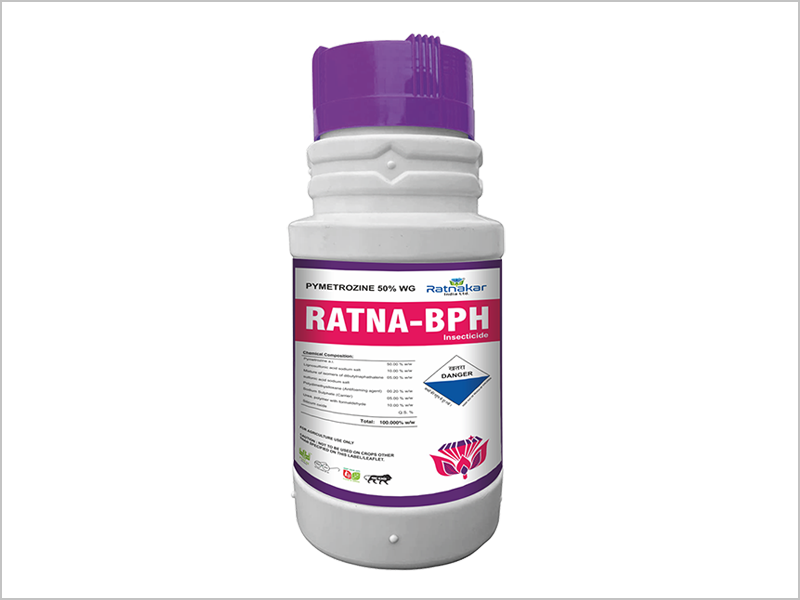
RATNA-BPH
Pymetrozine 50% WG
RATNA-BPH (Pymetrozine 50% WG) is a selective systemic feeding-blocker insecticide from Ratnakar India Ltd, Ahmedabad - a trusted agrochemical manufacturer, supplier, and exporter in India. Pymetrozine disrupts the stylet probing mechanism of sucking insects, preventing feeding and causing starvation death without direct contact kill. RATNA-BPH is highly selective for phloem-feeding insects with minimal impact on beneficial organisms. Manufactured and exported by Ratnakar India from Gujarat, RATNA-BPH is an ideal resistance management tool for Brown Plant Hopper in rice - particularly valuable where conventional neonicotinoid or organophosphate insecticides have led to field resistance development.
| Mode of Action | selective systemic and translaminar insecticide | |
|---|---|---|
| Recommended Crops | Target Pest | Dose/Acre |
| Rice | Brown plant hopper | 120 gm |
| Mango | Hopper | 120 gm |
| Packing | 100 ml, 250 ml, 500 ml, 1 ltr. | |
FAQ for RATNA-BPH
What is the unique mode of action of RATNA-BPH?
Pymetrozine is a feeding blocker acting on the insect CNS to inhibit the stylet probing mechanism, preventing phloem-feeding insects from feeding and causing death by starvation - not direct toxicity.
Is RATNA-BPH safe for beneficial insects?
Yes, Pymetrozine is highly selective for phloem-feeding insects with minimal impact on beneficial predators and parasitoids, making it an ideal choice for IPM-based programs in rice.
Which crops is RATNA-BPH recommended for?
RATNA-BPH is recommended for black gram, cardamom, citrus, coconut, coffee, cotton, green gram, maize, mango, and rice for plant hopper, aphid, and whitefly management.
Is RATNA-BPH effective against BPH-resistant populations?
Yes, Pymetrozine's unique feeding-blocker mode of action is different from neonicotinoids and organophosphates, making RATNA-BPH effective against many resistant BPH biotypes in paddy rice.
How is RATNA-BPH applied?
Dissolve RATNA-BPH WG granules in water and apply as foliar spray, ensuring thorough coverage of the base of rice plants where plant hoppers typically congregate for feeding.