
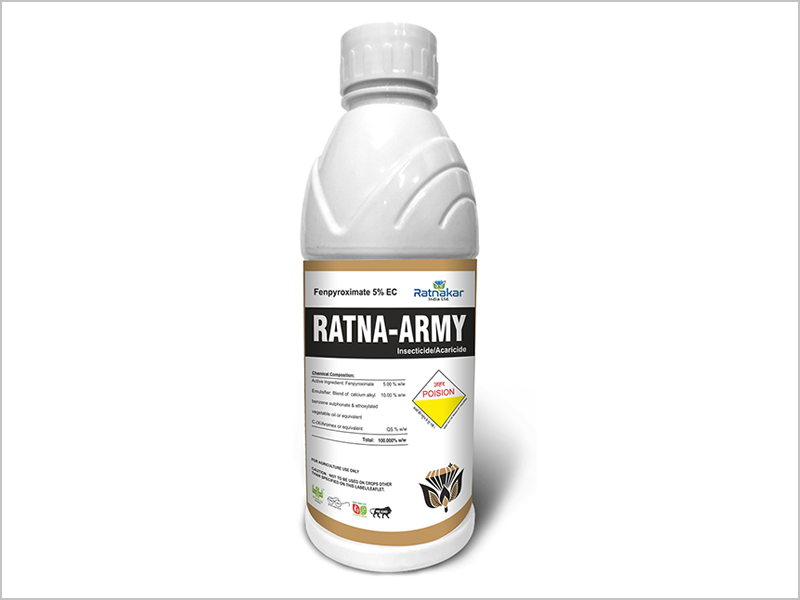
RATNA-ARMY
Fenpyroximate 5% EC
RATNA-ARMY (Fenpyroximate 5% EC) is a selective METI acaricide from Ratnakar India Ltd, Ahmedabad - a leading agrochemical manufacturer, supplier, and exporter in India. Fenpyroximate inhibits mitochondrial electron transport complex I through contact and stomach action, controlling eriophyid mites, yellow mites, red spider mites, pink mites, and purple mites at all life stages on chilli, coconut, cotton, and tea. RATNA-ARMY controls mite eggs, nymphs, and adults for comprehensive population suppression. Manufactured and exported by Ratnakar India from Gujarat, RATNA-ARMY is a trusted precision acaricide for farmers managing severe mite infestations on diverse high-value crops.
| Mode of Action | Contact and Stomach action | |
|---|---|---|
| Recommended Crops | Target Pest | Dose/Acre |
| Tea | Red spider mite, Pink Mite, Purple mite | 120-240 ml |
| Chilli | Yellow mite | 120-240 ml |
| Cotton | Jassids, Mites | 300 ml |
| Coconut | Eriophyid mites | 10ml/lit. |
| Packing | 50 ml, 100 ml, 250 ml, 500 ml, 1 Itr. | |
FAQ for RATNA-ARMY
Which mite species does RATNA-ARMY control?
RATNA-ARMY controls eriophyid mites, yellow mites, red spider mites, pink mites, and purple mites on chilli, coconut (root feeding method), cotton, and tea crops effectively.
How does Fenpyroximate work as an acaricide?
Fenpyroximate inhibits mitochondrial electron transport chain complex I (NADH-CoQ reductase), blocking energy production in mites at all life stages through contact and stomach action.
Does RATNA-ARMY control all life stages of mites?
Yes, Fenpyroximate in RATNA-ARMY is active against eggs, nymphs, and adult mites, providing comprehensive control across all mite life stages for thorough and sustained population suppression.
How is RATNA-ARMY applied in coconut?
For coconut, RATNA-ARMY can be applied by the root feeding method - a hole is drilled near the palm base, diluted solution poured in, and the hole is sealed for systemic uptake.
What is the recommended interval between RATNA-ARMY applications?
Rotate RATNA-ARMY with acaricides of different modes of action between spray cycles to prevent resistance development. Avoid repeated applications of the same chemical class in mite management programs.